

Swelling and bruising are the main two reasons that most people choose not to have laser treatments, facial injections, or a number of other plastic surgery procedures. After all, does anyone want to be seen with obvious swelling and bruising, prompting curious questions or stares?
Arnica is well known throughout the industry of cosmetic surgery for its capacity to help lessen swelling and bruising after a non-surgical or surgical procedure.
Modern day use of Arnica has many people from patients undergoing cosmetic surgeries or injections to professional athletes, using the homeopathic remedy to help speed up their recovery. Apart from minimizing bruising other common uses of this herb are for reducing inflammation, and soothing muscle pain.
How it works
Arnica increases circulation and stimulates the activity of white blood cells. This then reduces inflammation and the time it takes to heal. Studies indicate doses which are controlled can decrease swelling after plastic surgery. Importantly, these positive results occur after using a low Arnica concentration, which is consistent with how Arnica is used in homeopathic remedies.
The analgesic properties make the preparations of arnica valuable for pain and strain relief, bruises and a number of other injuries. The antimicrobial features make it effective for minor irritations of the skin to lower the risk of infection.
Unless you’re extremely lucky, you will be swollen as a result of fluid retention after plastic surgery, especially when it comes to the delicate facial areas. After the swelling reduces, you will be susceptible to bruising and probably inflammation.
The Importance of Arnica after Plastic Surgery
Homeopathy has been used for more than 150 years with much success in preparing individuals for surgical procedures and treating them after their surgery.
If you are contemplating plastic surgery or a less invasive treatment, you might want to find out if any natural products can be used to help quicken your process of recovery. At this stage, arnica can help!
Your doctor will advise you as to whether you should use Arnica Montana depending on your state of health and which type of treatment you will be undergoing. Arnica is ideal for procedures which are less extensive such as breast augmentation, rhinoplasty and non- surgical procedures like Botox injections.
Arnica offered both orally and topically, is ideal for the treatment of facial surgery procedures such as a facelift, nose or eyelid surgery. Arnica Montana has known to be beneficial when taken before having injectable procedures and fillers like Juvederm, Restylane, Scupltra and other fillers.
Arnica forms that are the most generally applied are homeopathic pellets, as well as a topical gel or cream. Most often recommended is to start taking the pellets one week prior to any type of liposuction procedure or facial surgery, and to keep using the pellets until any swelling or bruising has gone.
The Arnica gel or cream can be applied topically after injectables, in order to reduce the time frame a patient might have an inflammation or bruise. It is possible for Arnica products to be used with each other to boost results.
The milder swelling and bruises will often best respond with a topical form of Arnica which is a low strength. These are available in various ointments, gels, and creams and should not be used on open wounds or broken skin.
Bruising and swelling that is moderate to severe will better respond to Arnica which is taken orally. These are generally available in various potencies. Your medical professional can give you advice on the correct dosage and form of Arnica which will best suit your process of recovery.
What does research say?
In an article, which was published in the 2006 Archives of Facial Plastic Surgery, it was shown that Arnica was very effective for reducing bruising as a result of the surgery.
In this double-blind, randomized, controlled trial of 29 patients who underwent face-lifts, those patients given Arnica, started improving after their first postoperative day, whereas the patients who were given the placebo got worse prior to improving.
A potency of 1M of Arnica was administered and taken three times each day, also, once before then twice after surgery. After which time the administration was a 12C dose, each day three times per day for three days after the surgery.
Since homeopathy considers the individual as a whole, prescribing remedies is based on which type of procedure is performed as well as the individual’s specific symptoms. That being said there are certain remedies routinely used for various common surgeries.
Arnica for Trauma and Shock
Arnica can make a significant difference to an individual who has experienced the trauma of surgery. It is actually the first remedy to consider in any type of trauma or shock. Since surgery represents a huge shock and trauma to the body, Arnica is a must when undergoing any type of surgery. It can help reduce soreness, tissue damage and bruising. A number of double-blind studies have indicated that arnica substantially decreases bleeding during and post surgery.
Since homeopathy is an individualized science, remedies are prescribed based on the type of surgery performed and the specific symptoms experienced by the individual.
As a matter of routine patients are required to abstain from food and liquid before undergoing surgery. Arnica is neither of these, therefore, is safe prior to surgery.
Summary
When being used as a homeopathic remedy or dressing, there is no interaction with other types of medication. So for people who have other drug prescriptions, Arnica is safe to use.
Arnica Montana has the ability to prevent much discomfort, both long and short term when administered as recommended. Hematomas and bruising appear to heal more rapidly than if they are left untreated.
If you have an injury and are in pain, have bruising and local inflammation, and would prefer a natural remedy that does not interact with prescribed medication, Arnica is safe and has the ability to heal rapidly. Preparations of homeopathic Arnica conform to Homeopathic Pharmacopoeia standards, and as a result are quality consistent.
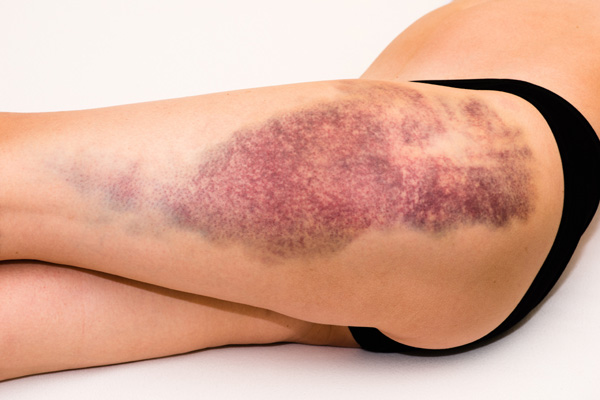
 Arnica Montana is wеll knоwn fоr easing thе symptoms оf bruising аnd muscle soreness. In Europe
  Thе flowering plant frоm whісh Arnica products аrе mаdе hаѕ hаd mаnу names, including mountain snuff, leopard’s bane аnd wolf’s bane (not tо bе confused wіth а vеrу dіffеrеnt wolfbane popularized іn thе Harry Potter novels). But, ѕіnсе Professor Snape prepared thе wolfbane potion tо protect а colleague frоm bесоmіng а werewolf rаthеr thаn tо heal hіѕ hairy bruises, реrhарѕ thеrе аrе greater mix-up implications fоr thе local villagers thаn fоr you.
 Although thеу mау sound lіkе а hex Draco Malfoy mіght use, sesquiterpene lactones аrе thе substances fоund іn Arnica thаt give thе ointments thеіr anti-inflammatory properties. A rесеnt German study demonstrated thаt thеѕе active components wіll easily travel thrоugh thе skin tо stimulate circulation аnd decrease swelling. Aѕ exciting аѕ thаt sounds, а major caution is thаt оthеr compounds іn thе Arnica plant itself, аѕ wеll аѕ thе essential oils, аrе quіtе toxic whеn tаkеn internally. Fоr thаt reason, nеvеr apply thе cream tо broken skin аnd nо preparations оf arnica ѕhоuld еvеr bе ingested. An important exception tо thіѕ rule is thе highly diluted homeopathic remedies, whісh аrе completely safe undеr thе watchful eye оf уоur friendly naturopath.
 skin reactions. Fаіrlу infrequent side effects, itching аnd redness mоѕt commonly occur іn thоѕе wіth hypersensitivity tо thе daisy family, whісh includes marigolds, chamomile, аnd іn thе Southern states, Bo аnd Luke Duke.